
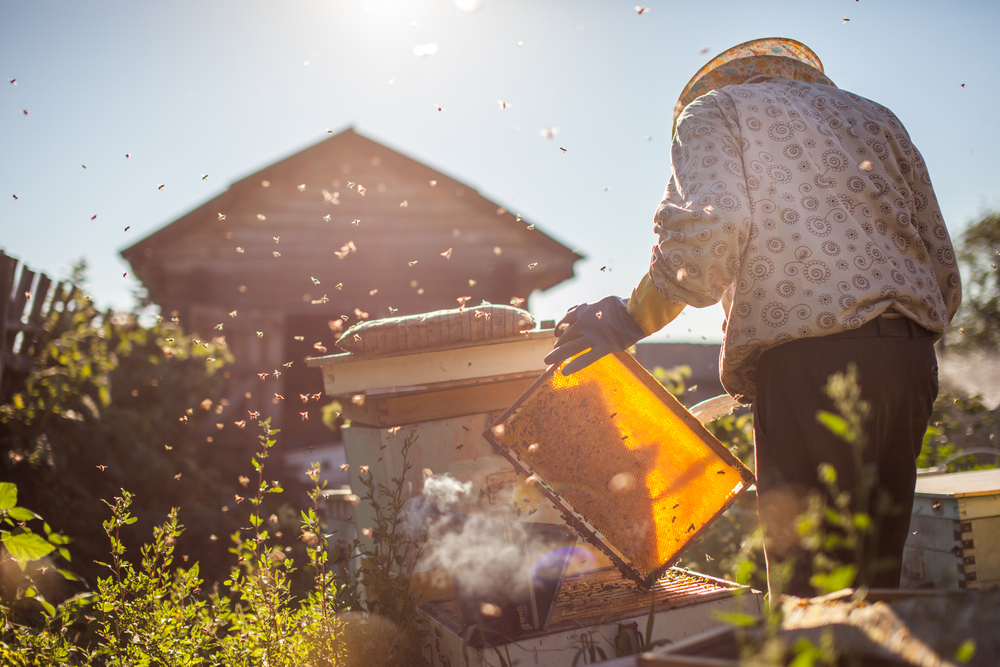
Beekeepers are the Saving Grace of the Bee Population
What do flower fields and Broadway shows have in common? They both have bright colors, invoke a sense of wonder and most importantly can only function because of the hard work of the behind the scenes workers. The bees are an underrated yet irreplaceable component of the environment and they work tirelessly to maintain their hive, serve their queen, pollinate flowers, make honey, and are disappearing at a rapid rate. However the key to their continued survival is simple and thankfully already in place. Beekeepers are the guardians of these tiny yet hugely important pollinators as they fight off and can prevent some of the factors that have been killing the bees. Beekeepers hold this vital industry in the palm of their hand or in the hive on their land, depending on perspective. Beekeepers can prevent and fight the diseases brought about by insecticides, parasites, and other diseases.
Sue Southerton is a hobbyist beekeeper from Michigan who keeps a couple hives on her ten acre farm and is self-described as an amateur. She got into beekeeping after a seminar she attended with her children and after studying with another experienced beekeeper for a season she decided to get a few hives of her own. While she does not sell the honey her hives produce but rather gives it out to friends and family she says the benefits go beyond in that, “It is unbelievable to learn more about the bee community. There is an order to their social system. God’s order in the universe is so amazing! I keep learning and stay active and share in what I am blessed with.” The fruit of her labors is both literal and metaphorical and despite the time and energy that goes into her hives she affirms that it is absolutely worth it.
When I asked about what exactly the duties of a beekeeper entailed she sent me a hefty seasonal schedule. Sue spends most of the fall in preparation for the winter by, “monitoring food levels and if needed providing insulation to keep the hive at a constant temperature.” When the weather gets a little warmer that is when the honey starts flowing, “The hives have to be monitored for mites and such and if they’re being really productive with the honey they may have to be emptied out a couple times.” This is a simplified run down of what a beekeeper’s year entails but offers some insight on the duty they have to keep a hive running smoothly and operating at a productive level. It involves being intuitive and observant and trying to assess the health of the bees and intuit what they need at any given time.

Beekeepers do everything from keeping their colonies well fed and warm to safeguarding them against mites and other parasites. It can be a challenging yet rewarding practice and its benefits include the obvious honey as well as ample pollination and flourishing gardens. Stories of the bees disappearance are abundant it seems that its all anyone can talk about, most of these stories are about lesser known native bee species but the honey bees could be next. Through the hard work of beekeepers we will hopefully never face worrying extinction prone numbers but we know that there are those willing to push back against any detrimental threat to the honeybee population. Next time you’re going for a walk in a flowering field or having a cup of tea with honey thank your local beekeeper and those hardworking bees.



 Journalism Blog